Stories & Swipe Up

One social media trend I find to be very popular and engaging is the use of stories, specifically when using Instagram. In order to create a successful brand for themselves almost every Instagram influencer utilizes the story feature on a daily basis. This allows them to share products, services, and most importantly engage with followers on a personal level. 

According to Instagram, 500 million+ accounts use Instagram Stories every day, and ⅓ of the most viewed stories come from businesses. Embedded Social predicts that sharing with Instagram Stories will surpass sharing to the feed at some point in 2019, according to their article, ”Everything About Instagram Stories Statistics and Analytics.”

Instagram Stories is a tool that can be used regardless of what the main topic of your content of your account is, which makes it a valuable asset for any type of brand. 

Below is an example of an influencer using this feature to her advantage:
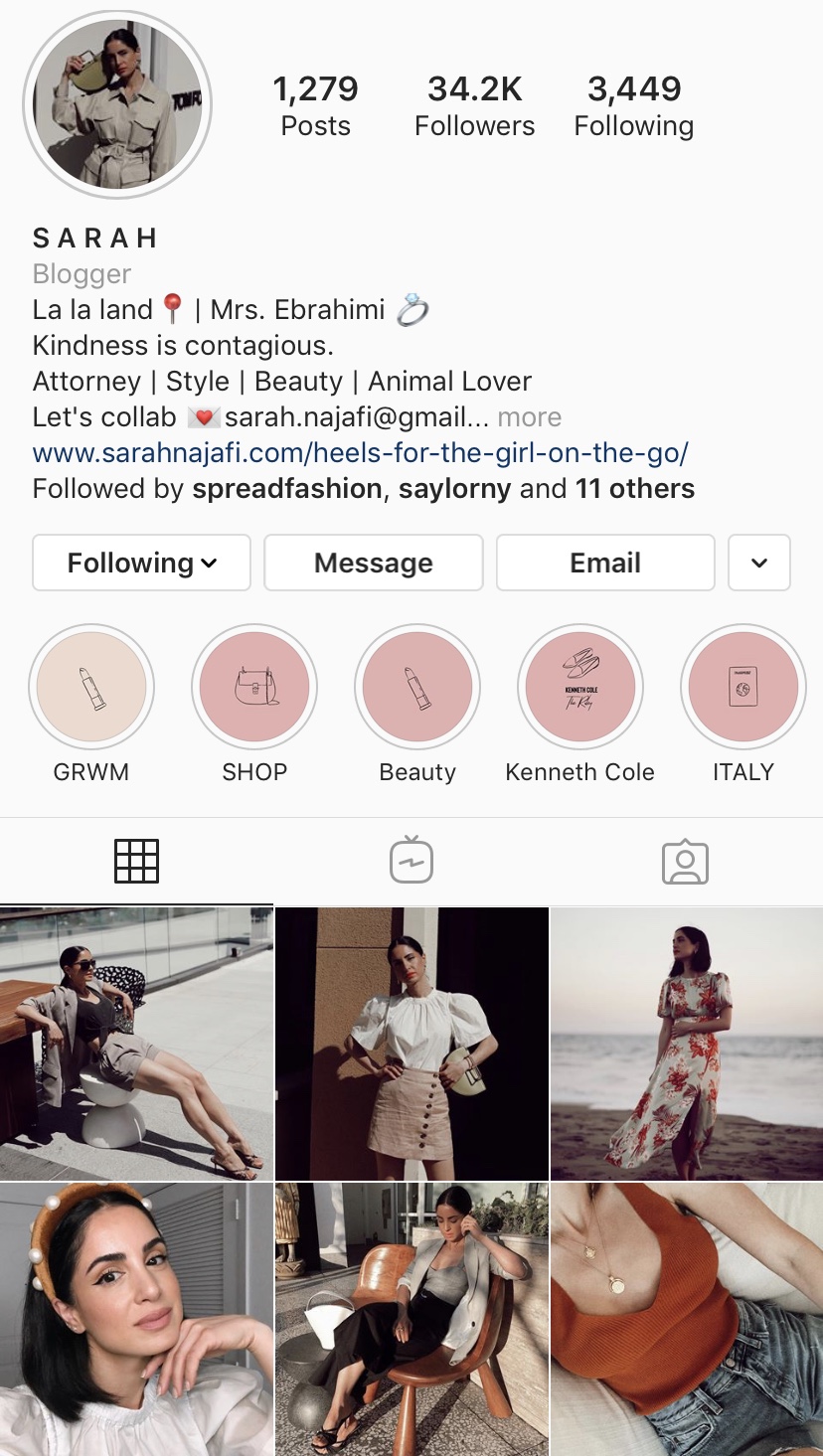
Sarah Najafi Is a style and beauty blogger with about 35k followers on instagram, she regularly uses Instagram Stories to engage with users.

By utilizing this feature she has created a brand that allows for a trusting fan base of followers to whom she can recommend clothing and beauty products to.

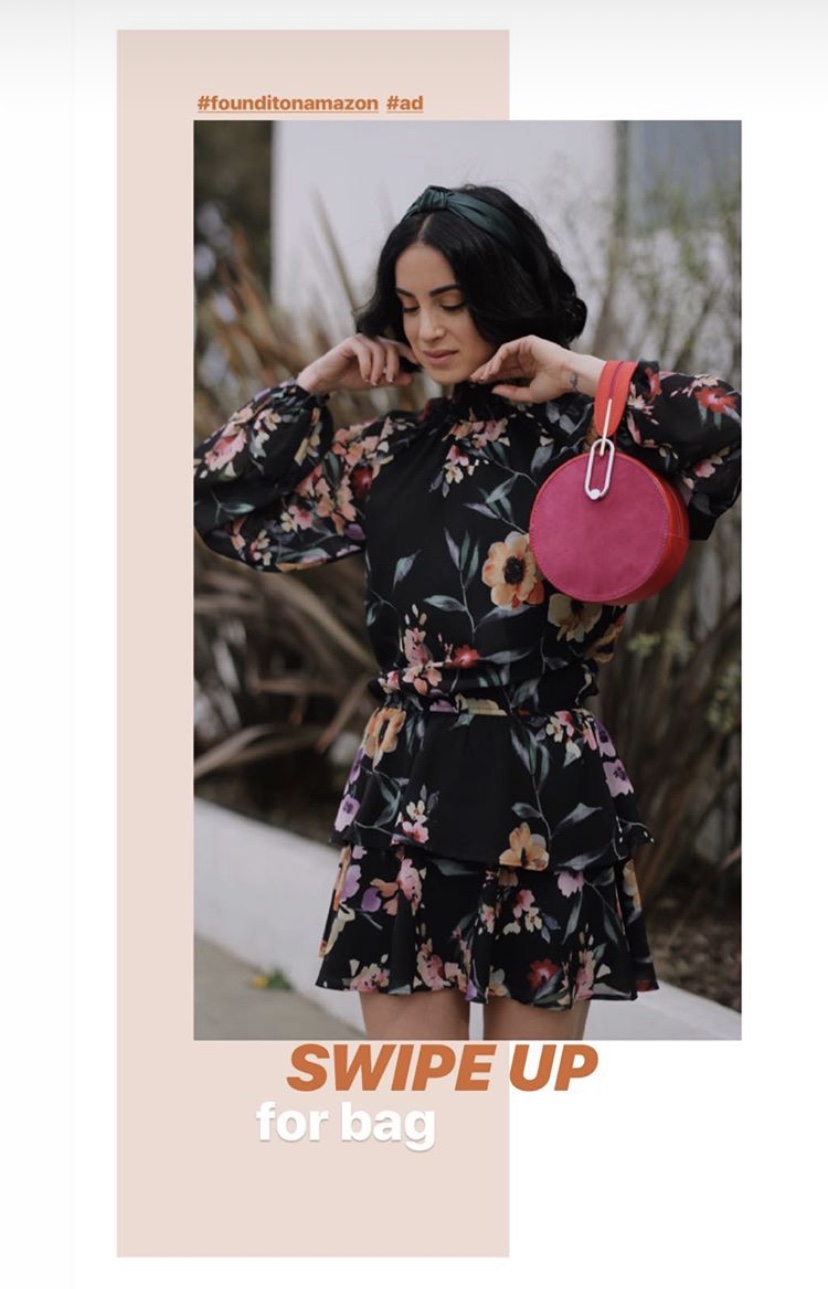
Due to the size of her account following she is also able to use a feature called “swipe up” she is able to embed links into her stories where users can swipe up and be directly transferred to whatever website is linked. This feature also allows her to form business partnerships where she can advertise, as seen below.

I believe that the stories feature will be the primary way users communicate in the future when using Instagram. Although there will not likely be a loss of photos shared to the feed, I think this feature is a better way to get the attention of a following.

Instagram Stories are better, in my opinion, at capturing the attention of viewers and forming a relationship. It seems to me that it has enabled influencers to gather followers and gain their trust in order to more easily sell a product. This is due to the fact that the following feels like they know the person, are a part of their lives in a sense, and can buy into what they are saying (or selling) due to the fact that they trust them.

Reflection of class.

One of our conversations that resonated with me the most is the one centered around advertising via Instagram/bloggers. Although it’s a great idea to use every day people to spread a companies message, is it authentic?

Every day women take style cues, cleaning tips, and lifestyle advice from other woman on social media, so it makes sense that a company would capitalize on that.

My question on this has always been, how authentic is it? Is the every day person who makes their livelihood on a blog ethical enough to suggest products to followers? Do they actually stand behind what they’re representing or are they just doing it for the money?

Every time I scroll through my Instagram feed I see women with the ability to add swipe up to their stories. Swipe up for my outfit, swipe up for this magic cleaning product that will make your microwave look new again, swipe up for this or that. If I swiped up every time I heard it on a daily basis I wouldn’t have a thumb.

Then there’s the ones who say use my code (me). Using a code to get a discount on what they buy or a store credit, it’s still a way of advertising and as smart as it is I always tread cautiously when I see it. Personally, if I’m posting something as a suggestion (and I by no means have a following of any substantial kind) it’s because it’s a product that I would actually recommend to my family and friends. But is that the case internet wide? I highly doubt it. So I guess moving forward we have to just hope that all the bloggers/Instagram models/internet it girls are doing the same, suggesting products that they would want their mama’s to buy, and not just the ones they have a lucrative deal with.

Big Data & PR

Big data allows for awesome posts like these, which remind me that I am in fact a broke 32 year old who is in need of a side hustle. What an effective (and creepy) way to reach a targeted audience.

Big data allows you the ability to reveal patterns and trends within sets of data, which is potentially a great tool for public relations.

Using big data a PR specialist can gather information and get an overall vibe from a specific community on how it feels about a company. This way they can craft messages that are best fit for a specific type of audience. Big data can give PR specialists a sense of what people want or what they are looking for allowing for more fine tuned message to be created.

Net Neutrality.

Net neutrality has, in a nutshell, ensured that we all have open and fair access to the internet. Last year these protections were rolled back and since then, although we’ve seen no major changes to our internet access, it doesn’t mean we should stop worrying.

The potential effects far exceed an increase to your internet bill, and even though I’ll be the first person living off the internet grid if they do, the scariest part of the repeal is the potential for censorship.

The old net neutrality rules prohibited service providers from slowing the transfer of data, blocking legal content on websites or apps, and prohibited the creation of fast and slow lanes. Removing these rules now allows service providers the ability to censor what its consumers can access, which would be a detriment to democracy.

Turning access to the internet into a luxury, could significantly limit the flow of information to those unable to pay. The first demographic likely to feel the effects would be those not able to afford the hike in their bill (including me.)

As we know, social media allows for a wide range of political debate to take place. Now imagine if only a specific demographic had the means to afford a social media package in the feared “pay to play,” outcome of the net neutrality repeal.

If these debates are limited to only one group of individuals, are we really getting the whole picture or both sides of the argument? Maybe, maybe not. But you can see how this may be a problematic issue.

Or how about the fact that Representatives use Facebook and the internet as a primary means of communication with their constituents, if they can’t reach the majority of those they govern will that truly be an effective way to communicate? Will they actually hear the true concern of their people, or just those who have the ability to afford it?

Instead of potentially limiting access to internet, the government should stress the importance of it as a necessity for a well run democracy. They should be doing everything in their power to ensure that each and every citizen has a voice that can be heard in the easiest and most convenient way via the internet. Censorship is never the answer to democracy.

Differing Consumptions

After reading the blogs of my classmates, I have determined that we are all essentially the same as far as our social media consumption. Most prefer Facebook which is my typical first choice but where I differ is on the use of twitter.

Until starting this class I used twitter very infrequently to the point where I deactivated my account. While some of my classmates have upwards of 2,000 tweets, I have only the ones I’ve sent are in regards to schoolwork.

A few other classmates noted they like to use apps like Tumblr which is also not something I am familiar with. As far as photo sharing is concerned I do use Instagram quite often, if not more than Facebook, which is something I have in common with quite a few folks.

The last area I noticed in which I differ from my classmates is social commerce, where I spend quite a bit of time shopping online they did not mention it. This is probably a good thing for most as I realized after doing my “new year, new me” budget, how much money I should be saving a month, but don’t.

What am I doing on my phone for 7 hours a day!?

Ever want to feel really bad about something? Check your screen time. If you’re anything like me (& I hope you’re not), you might see a shocking 7 hours of screen time per day. How does that even happen? Do I work for a living? What am I even looking at?

Apparently the answer is 24 hours a week of social networking, roughly 3.5 hours a day. Thankfully iPhone breaks down what they actually consider to be social networking. (That way I can justify to myself that maybe it’s not as bad as I think. )

Nope, it is that bad. Over 10 hours a week between Facebook and Instagram. 5 hours of Netflix, but to be fair it’s my background noise while I get ready for work, and I watched The Ted Bundy Tapes this week so, 🤷🏻‍♀️. The only real surprise here is the amount of time I spent (or didn’t spend) on Poshmark, this is reflective in the amount of sales I didn’t make this week. More time on the app = more sales.

As far as the Conversation Prism is concerned, I’m a social networker. As much as I would have considered myself more of a social commerce kind of girl, the proof is in the screen time results 👎🏼. That being said, my personal challenge for this week is to up the amount of time I spend using my Poshmark and Weight Watchers apps. That way even though my phone is constantly in my hands, and I’m using it way more than I should, at least what I’ll be using it for will be beneficial!

Poshmark & Social Media

Chances are if you make a positive comment on a piece of my clothing, I’m going to tell you it was cheap as hell and I bought it on Poshmark. This usually leads to the question, “what is Poshmark?” As a mother who has minimal adult interaction I can go down a bit of a rabbit hole when I start talking about it. (So, don’t ask unless you REALLY want to know.)

Poshmark is an app and website that allows its users to buy and sell clothing. As a seller, it’s how I’ve been able to double down on student loan and credit card payments and as a buyer it’s how I ball on a budget. Log into the app and see for yourself. You can buy Louis Vuitton 2-grand below retail, Coach at a Target prices and adorable Jimmy Choo flats for under $100.

A future poshmonster checking out mommy’s new shoes.

While I do enjoy that I can make between my car payment and mortgage every month reselling clothes, one of the things I love most about Posh is how the company interacts with its users on a social level.

Let’s start with the greatest social media platform of all time (IMO), Instagram. Poshmark’s IG account keeps users in the know about upcoming events, informs them about what’s happening on the app (sale anyone?), and highlights user closets. The last bit is smart on Poshmark’s part since they make 20% of every sale. Why not advertise their users? Their Facebook page is very similar with more video.

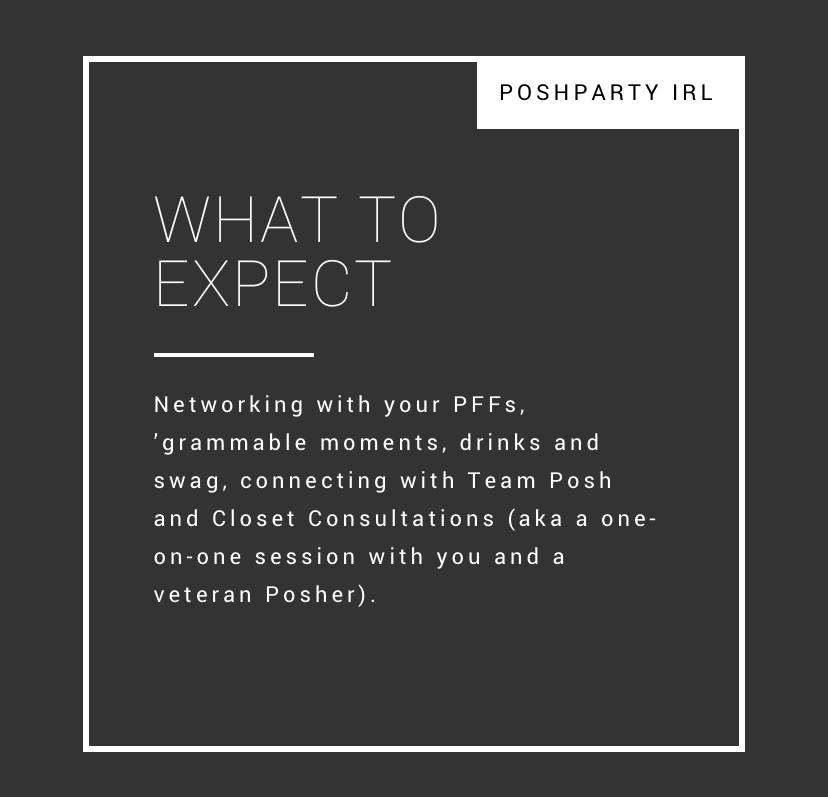
They also encourage users to meet in person (weird, right?) via Posh Party Live. PPL is an event series that tours the United States. PPL lets Poshmark users connect and network. There they can exchange tips and tricks for selling, get a consultation of their closet, and get to know top Posher’s in their area via panel discussions.

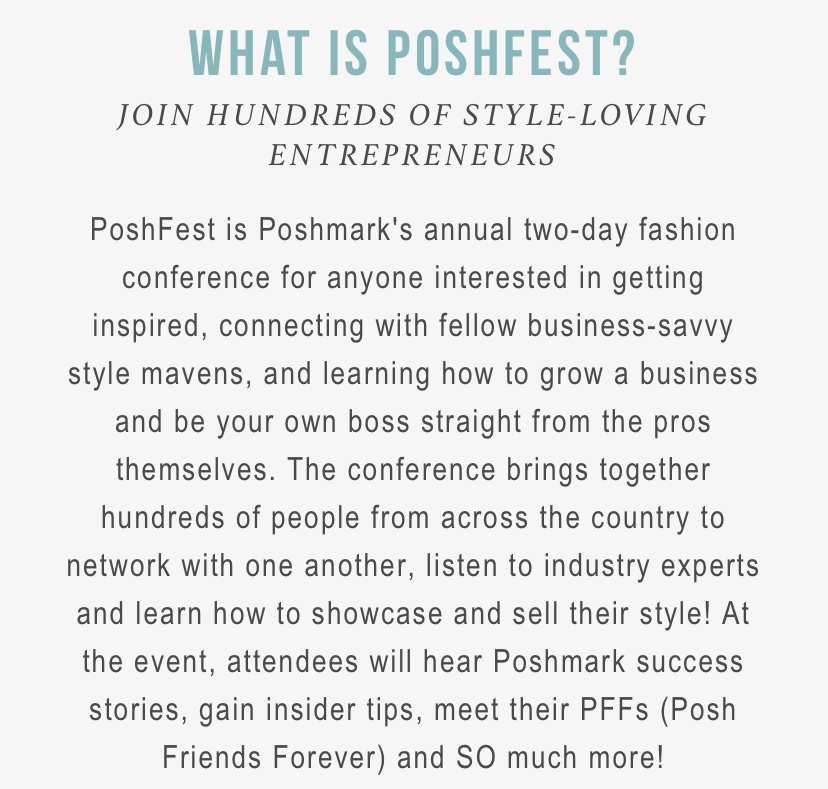
In addition to Posh Party Live, Poshmark also holds an annual conference/party for users called, Poshfest.

Lastly, The Poshlife, Poshmark’s blog, is another way the company socially connects with its users. Here you can find up to date information about events and tickets, giveaways, app updates, and more tips for sellers.

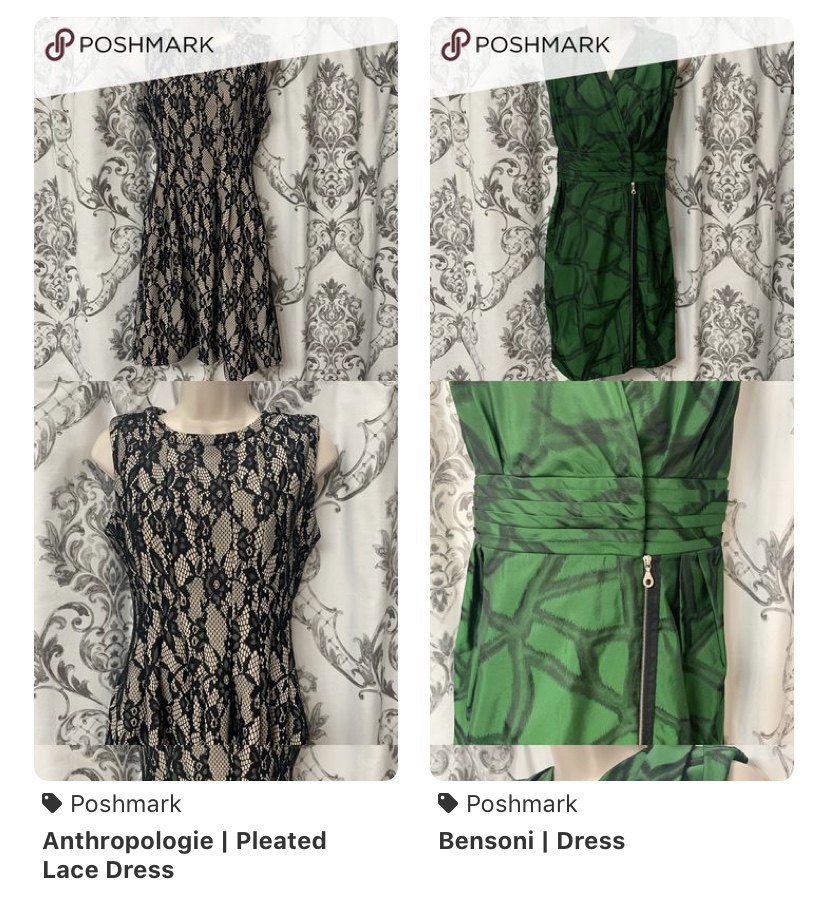
Aside from the connections they forge via their own social media platforms they also encourage users to share their listings on personal accounts. If you’ve ever scrolled through Pinterest and seen a post like this

it’s because a user, me in this case, has shared a listing from their closet. Users can also share to Twitter, Facebook, Instagram, and Tumblr.

So, if you haven’t already, check out Poshmark. You’ll find a company that has a cool way of connecting with its users, while connecting its users with each other for a true feeling of community. Happy Poshing, stop by & say hi.

Combatting Fake News

Remember back in the day (2005) when the worst thing you might see on your timeline was this…

Oh no! Someone pooped on your wall.

Well, after 15 years of Facebook, we’ve traded our ASCII poops for another type of shit. It’s called, fake news. It’s not a new trend, but it’s definitely one that’s evolved. Fake news used to be end-cap magazines proclaiming, “ELVIS LIVES! Enjoying retirement in Sarasota,” and it was only purchased by your crazy uncle, Karl. Now, it’s morphed into “news” websites, that are so convincingly real looking, they can fool the average adult. Paired with a President who has declared war on the press, and you have a recipe that strips away at democracy with every share.

Fake news manifests itself if a lot of different ways, here’s a few different examples you may have seen…

1.) Political- Although it may not have the power to sway a voter’s opinion, it certainly misleads and arms people with wrong information for debate.

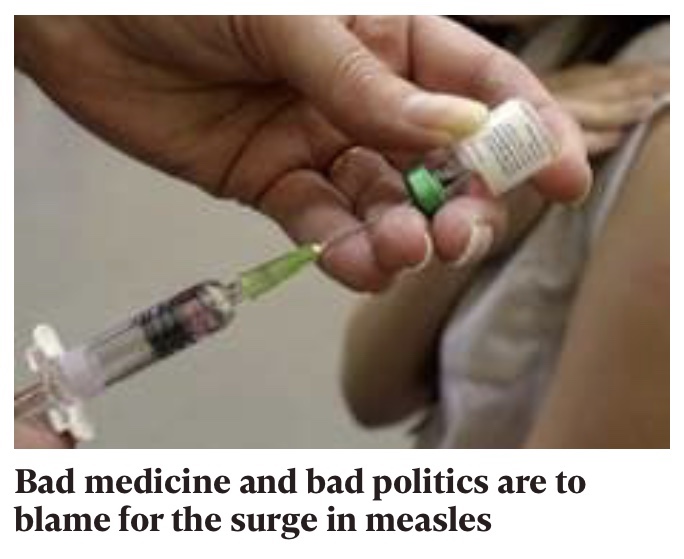
2. Public Health- In my opinion the most detrimental to the general public is misleading information concerning public health, specifically when it concerns vaccines or the spread of diseases.

3.) Celebrity Gossip/Death Hoaxes- Imagine having to call your mom and say it’s a joke, I’m fine.

So how, as users, do we combat the spread of gossip and potentially dangerous misinformation? After 15 years of Facebook can we finally become responsible consumers of information? Here are a few ways to curb the spread of fake news.

1.) Verify what your sharing is fact. There are a myriad of websites dedicated to the verification of news. #sharingresponsiblyiscaring. If you’re feeling super lazy, sometimes a quick scroll through the comments section will serve to verify as well.

2.) Report it! “If you see something, say something.” It’s not hard to identify fake news if you know what you’re looking for, and it’s even easier to make social media platforms aware of it.

3.) Don’t share something just because it fits your agenda.

4.) Talk to your children, just like you would about anything potentially harmful to them, Make sure they know that fake news and misinformation exists. (Otherwise you’re going to have a ten year old that walks around thinking dinosaurs are real because they saw it on YouTube.) Also, talk to your parents.

Stay safe & be good.

– Katie

PS I’ll leave you with my favorite two pic of real news from today ♥️